
5 Types of Sales Videos That Work for Illinois Businesses in Oak Brook and Naperville
Show. Don't Just Tell. Use the Right Video to Help Customers Say "Yes."
You know you need video. Every competitor seems to have one. Every marketing article says it's essential. But here's what they don't tell you: not all sales videos are the same.
Some videos explain how your product works. Others prove it delivers results. Some build trust through real customer stories. And others persuade prospects who are on the fence to finally take action.
For businesses in Oak Brook, Naperville, Aurora, and Chicago, choosing the right type of sales video isn't just about production quality—it's about matching the format to your specific goal and where your prospect is in the buying journey.
Recent industry research shows that 73% of video marketers have created explainer videos, 60% have created testimonial videos, and 48% have created product demos—but the most successful companies aren't just making videos randomly. They're strategically deploying different video types for different purposes.
The difference between a video that sits unused and one that becomes your most valuable sales tool often comes down to this: choosing the right format for the job.
At Acclaim Media, we help Illinois businesses match the right video format to their sales goals. Whether you need a quick product demonstration, a compelling customer story, or a detailed pitch that pre-sells before your team ever gets on the phone, understanding which type of sales video production in Naperville serves your specific need is the first step to results.
Let's explore the five types of sales videos that consistently help teams across Chicagoland close more deals—and when to use each one.
Already read about why sales videos work and how to measure ROI? Now let's get tactical about which type your business needs.
1. The Product Demo Video: Show What Your Product Does - Not Just What It Is
Best for: Explaining functionality, demonstrating features, educating prospects on how your product works
If your sales team spends the first 15 minutes of every call walking through how your product functions, you need a demo video. If prospects struggle to understand your product from text descriptions alone, you need a demo video. If "Can you show me how this works?" is a question you hear repeatedly, you definitely need a demo video.
Product demo videos save hours of repetitive explanation while keeping your message consistent across every prospect. Instead of hoping each sales rep explains features accurately and compellingly, your video does it the same way every time—perfectly.
What Makes a Product Demo Video Effective
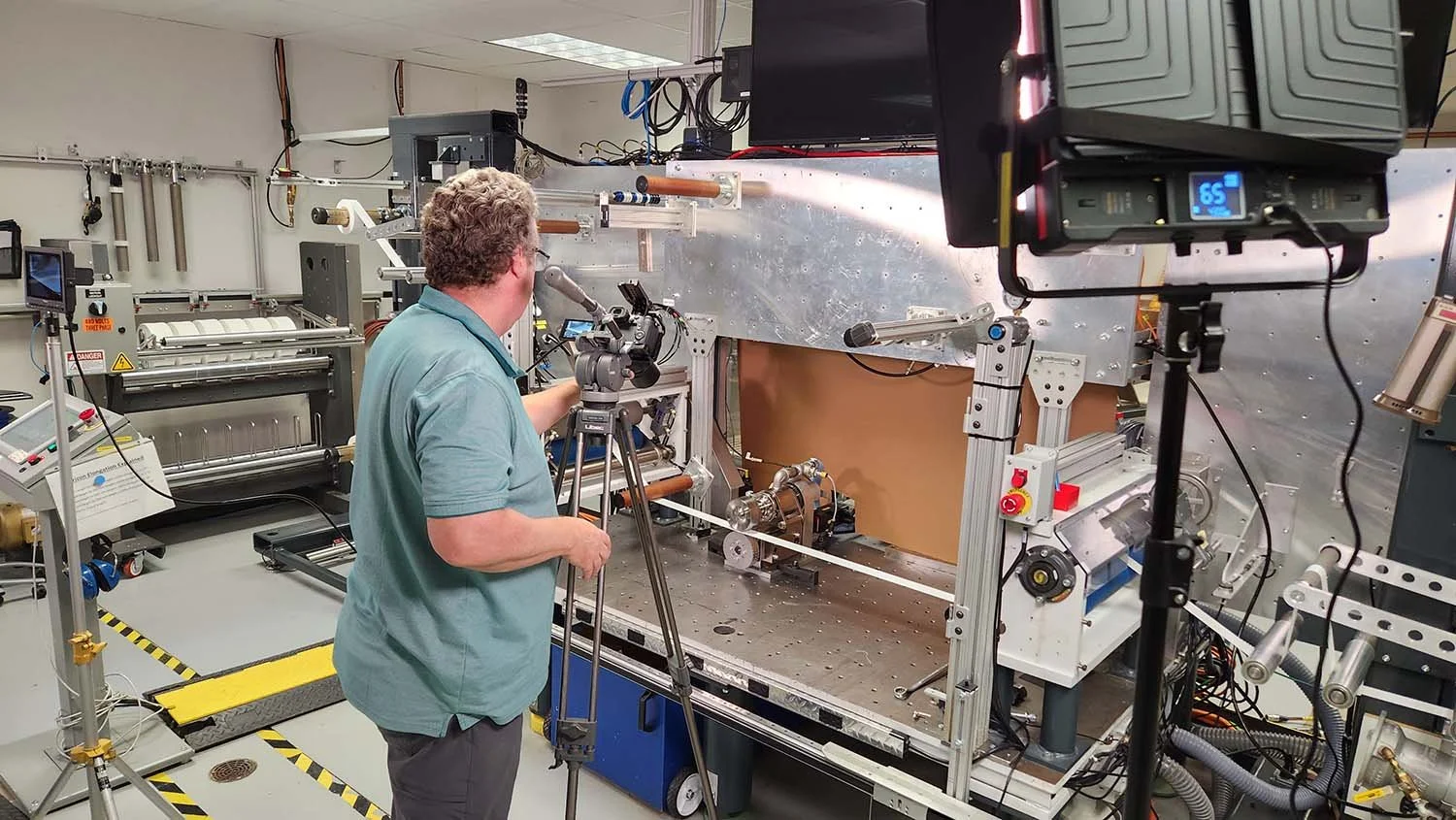
Visual demonstration over verbal description. The power of demo videos is showing, not telling. Prospects see your interface, watch your equipment in action, or observe your process step-by-step. This is especially valuable for technical products where words alone can't convey functionality clearly.
Focused on benefits, not just features. Weak demo videos walk through every button and menu option. Strong demo videos connect each feature to a specific problem it solves. "Here's the scheduling dashboard—this is where you eliminate the back-and-forth emails that waste 3 hours per week."
Addresses common questions proactively. Your sales team knows which questions come up in every conversation. Demo videos should answer those questions before they're asked, shortening sales calls and pre-qualifying leads.
Short and structured. Most effective product demo videos run 2-4 minutes, hitting 3-5 key capabilities rather than trying to show everything. Longer deep-dive versions can exist for serious prospects, but the main demo should respect attention spans.
Who Benefits Most from Product Demo Videos
Technology and software companies use demo videos to show user interfaces, demonstrate workflows, and prove that their solution is intuitive to use. Seeing the software in action builds confidence that text screenshots cannot match.
Manufacturing and engineering firms deploy demo videos to show equipment operation, production processes, and technical specifications. For prospects in Wheaton, Lombard, or Glen Ellyn evaluating machinery or components, watching them work eliminates uncertainty.
Any business selling something technical that's hard to explain in words benefits enormously from visual demonstration. If your product has moving parts, digital interfaces, or multi-step processes, show it rather than describe it.
Where to Use Product Demo Videos
Embedded on product pages and landing pages
Sent in follow-up emails after initial conversations
Shared during virtual sales presentations
Posted on YouTube for SEO and discoverability
Used in paid ads targeting prospects searching for solutions
The pattern we see consistently: prospects who watch demo videos before sales conversations ask better questions, have fewer basic objections, and move through the pipeline faster. They've already seen it work—now they're just confirming fit and pricing.
Need to simplify a complex product explanation? Schedule a consultation to discuss which type of video serves your goals.
2. The Customer Testimonial Video: Let Your Happy Customers Do the Talking
Best for: Building credibility, overcoming skepticism, providing social proof, establishing trust
You can claim your product is effective. You can list impressive features. You can promise excellent results. But when a real customer—someone just like your prospect—says the same things in their own words while sharing their genuine experience, skepticism evaporates.
Testimonial videos work because people trust people more than they trust marketing claims. Industry research confirms this: 93% of marketers believe user-generated content holds more credibility than brand-produced content. When prospects hear authentic stories from customers who faced the same challenges they're facing now, buying decisions accelerate.
What Makes a Testimonial Video Powerful
Authenticity over polish. The most effective testimonial videos don't feel scripted or over-produced. They capture real people sharing genuine experiences in natural language. Slight imperfections—pauses, informal phrasing, genuine emotion—actually increase credibility.
Specific results, not vague praise. "They were great to work with" is nice but forgettable. "We cut our processing time by 40% in the first month, which freed up two full-time employees to focus on growth initiatives" is concrete and memorable. Numbers and specific outcomes make testimonials believable.
Problem-solution-result structure. The best testimonial videos follow a simple narrative: "Here's the challenge we faced. Here's why we chose this solution. Here's what changed after implementation." This structure mirrors your prospect's mental journey and makes the testimonial relevant to their situation.
Visual proof when possible. If you can show the customer using your product, working in their facility, or displaying tangible results, the testimonial becomes exponentially more convincing. B-roll footage of their business in action adds layers of credibility that talking-head interviews alone cannot achieve.
Here’s how to capture b-roll that proves the story so testimonials feel specific, not generic.
Who Benefits Most from Testimonial Videos
Service-based businesses where trust and relationships drive decisions use testimonial videos to demonstrate their track record. When prospects in Hinsdale, Western Springs, or La Grange are evaluating professional services, hearing from satisfied clients reduces perceived risk.
B2B companies with long sales cycles deploy testimonials strategically to overcome objections at critical decision points. When a committee is debating whether to move forward, a testimonial from a similar company who achieved measurable results often tips the scales.
Any business competing primarily on trust and reputation rather than price finds testimonials invaluable. If your prospects are choosing between you and competitors based on who they believe will actually deliver, customer stories become your most persuasive tool.
Where to Use Testimonial Videos
On your homepage to immediately establish credibility
On case study pages supporting detailed success stories
In email nurture sequences to maintain engagement
During sales presentations when addressing specific objections
On landing pages for prospects in the consideration stage
Companies across Chicagoland consistently report that testimonial videos reduce the time needed to build trust in sales conversations. When prospects arrive having already heard from satisfied customers, they're pre-sold on your credibility—conversations can focus on customization and next steps rather than proving you're legitimate.
Looking to capture compelling customer testimonials? Our video production approach ensures authentic stories that resonate.
3. The Explainer Video: Simplify Complex Ideas with Clear Visuals and Narration
Best for: Breaking down abstract concepts, educating prospects on unfamiliar topics, clarifying value propositions
Some offerings are inherently difficult to explain. Services with multiple components. Products that solve problems prospects don't fully understand yet. Solutions that require education before the value becomes clear.
Explainer videos excel at taking complicated ideas and making them understandably simple through a combination of clear narration, strategic visuals, and structured information flow. They're particularly valuable when you're introducing something new to market or when prospects need context before they can appreciate your solution.
Explainer videos are designed to be crisp, clear, and informative — which means the editing process has to be tight and efficient. Whether you're combining motion graphics, voiceovers, or live-action footage, keeping everything aligned is essential. That’s where timecode comes in. This often-overlooked tool helps editors streamline complex projects and eliminate guesswork. We dive deeper into how it works in our post on timecode video editing explained.
What Makes Explainer Videos Work
Problem-first approach. The most effective explainer videos start by articulating the problem in terms the prospect already understands and feels. Once they're nodding along—"Yes, this is exactly what I'm dealing with"—introducing your solution feels like the logical answer they've been looking for.
Visual clarity. Explainer videos often use a mix of live footage, motion graphics, animation, and screen recordings to illustrate concepts that would be confusing in text. Seeing a process visualized or watching a system diagrammed makes the abstract concrete.
Focused narrative flow. Good explainer videos follow a tight structure: problem → solution → how it works → why it matters → what to do next. Every sentence serves a purpose. Nothing extraneous. The goal is clarity, not comprehensiveness.
Versatile deployment. Unlike product demos or testimonials that might be best suited for specific pages, explainer videos work almost everywhere—homepage, service pages, social media, email, presentations. Their educational nature makes them valuable across the entire funnel.
Who Benefits Most from Explainer Videos
Service-based companies selling intangible offerings use explainer videos to make their process visible and understandable. When prospects in Burr Ridge, Darien, or Willowbrook can't physically "see" what they're buying, explainer videos show them through narrative and visuals.
Companies introducing innovative solutions that require market education deploy explainer videos to build understanding before attempting to sell. If prospects don't yet recognize they have the problem you solve, the explainer video creates that awareness.
Businesses with multi-step processes use explainer videos to walk prospects through how engagement works, what to expect, and how value is delivered. This reduces uncertainty and pre-answers the "What does working with you actually look like?" question.
Where to Use Explainer Videos
Homepage to immediately communicate what you do
Service pages to educate on specific offerings
Social media for awareness and shareability
Sales presentations to set context before detailed discussion
Email campaigns to warm cold prospects with education
The pattern across Illinois businesses: explainer videos shorten the education phase of sales dramatically. Instead of spending 20 minutes of a first call explaining basics, prospects arrive already educated—ready to discuss application to their specific situation.
Need to make a complex offering simple? Explore our approach to explainer video production.
4. The Case Study Video: Prove It Works with Real Results
Best for: Demonstrating ROI, showcasing detailed success stories, overcoming "will this work for us?" objections
Testimonials provide social proof. Case study videos go deeper—they walk prospects through the complete journey of a customer challenge, your solution, and the measurable results achieved. When prospects need more than a 60-second testimonial to feel confident, case studies provide the detailed proof they're seeking.
Research shows that 94% of people feel that video helps build confidence during the sales process. Case study videos specifically address the confidence gap by showing not just that your solution works, but exactly how it works and what results to expect.
What Makes Case Study Videos Compelling
Structured storytelling. The most effective case study videos follow a clear narrative arc: challenge (what problem the customer faced), solution (what you implemented and why), and results (specific, measurable outcomes). This structure makes the story easy to follow and relevant to prospects facing similar challenges.
Quantifiable outcomes. Vague success stories don't persuade. "We helped them improve efficiency" is forgettable. "We reduced their processing time from 6 hours to 90 minutes, saving $12,000 monthly in labor costs" is specific and credible. Numbers make case studies believable.
Multiple voices. The strongest case study videos include perspectives from different stakeholders—the executive who approved the investment, the manager who oversees implementation, the employee who uses it daily. Multiple perspectives build credibility and address different objections.
Visual evidence. Whenever possible, show the solution in action at the customer's location. Film their team using your product, walk through their facility, capture before-and-after comparisons. Visual proof amplifies the impact of verbal testimony exponentially.
Who Benefits Most from Case Study Videos
B2B companies with high-value offerings use case study videos to justify significant investments. When prospects in Addison, Bensenville, or Wood Dale are evaluating six-figure solutions, detailed case studies provide the evidence needed to move forward confidently.
Businesses competing on results rather than price deploy case studies to demonstrate value. If your offering costs more than competitors but delivers superior outcomes, case study videos prove why the investment pays for itself.
Companies selling to committees find case study videos invaluable for circulating to multiple decision-makers. One comprehensive video can educate an entire buying team without requiring your sales rep to repeat the story in separate meetings.
Where to Use Case Study Videos
Dedicated case study pages on your website
In proposals and sales presentations for serious prospects
Follow-up emails after initial meetings when prospects need more detail
As LinkedIn content targeting specific industries or roles
In webinars showcasing success stories
The consistent pattern: case study videos reduce deal friction by pre-answering the critical question "Can you prove this will work for someone like us?" When prospects see detailed evidence of results achieved for similar companies, their confidence in moving forward increases dramatically.
5. The Personalized Sales Video: Send Messages That Feel One-to-One
Best for: High-value prospects, follow-up after meetings, standing out in crowded inboxes, building personal connection
In an era of automated emails and mass marketing, personalized video messages cut through the noise with genuine human connection. These are short, informal videos—typically 30-90 seconds—recorded by your sales team and sent directly to specific prospects.
Unlike the other video types which are produced once and used repeatedly, personalized sales videos are one-off messages created for individual prospects or small groups. They're not meant to be polished productions—the authenticity and personal touch are what make them effective.
What Makes Personalized Sales Videos Work
Genuine personal connection. Seeing a real person addressing you by name, referencing your specific situation, and offering relevant insights creates immediate rapport. Email can feel impersonal. A personalized video message feels like someone took time specifically for you.
Higher engagement rates. Industry data shows that emails with video see significantly higher open and response rates than text-only messages. When your subject line says "Quick video for [First Name] at [Company]," curiosity drives clicks.
Differentiation from competitors. If every competitor is sending standard text emails, a personalized video makes you memorable. Even if your offering is similar to others, the way you communicate sets you apart and signals that you'll provide excellent service.
Efficiency at scale. While personalized videos take more effort than generic emails, they're far more efficient than extended phone tag. A 60-second video can communicate what would take a 15-minute phone call, and prospects can watch on their schedule.
Who Benefits Most from Personalized Sales Videos
Sales teams targeting high-value accounts use personalized videos to stand out when competing for significant deals. When a prospect in Rockford, Brookfield, or Forest Park represents potential six-figure revenue, the extra effort of creating a personal video is clearly worthwhile.
Businesses with longer sales cycles deploy personalized videos as touchpoints between formal meetings. Following up with a quick video recap, answering a specific question, or sharing relevant information maintains momentum without requiring live conversations.
Companies selling relationship-driven services use personalized videos to demonstrate the personal attention prospects can expect. If your competitive advantage is customer service and personal relationships, personalized videos prove it before the prospect even becomes a customer.
Common Uses for Personalized Sales Videos
Introduction videos to cold prospects replacing generic cold emails
Post-meeting recaps summarizing key points and next steps
Answers to specific questions that came up in conversations
Check-ins during long sales cycles to maintain engagement
Thank-you videos after demos or consultations
Implementation Options
While Acclaim Media specializes in high-quality production videos, personalized sales videos are typically created by your internal team using simple tools. We've consulted with Chicago-area businesses on setting up systems and templates so sales teams can record professional-looking quick videos using just a laptop camera or phone.
For businesses interested in implementing personalized video strategies, we can provide guidance on equipment, best practices, and training to ensure your team creates videos that look professional while maintaining the authentic, personal feel that makes them effective.
Interested in exploring personalized video strategies for your sales team? Contact us for a consultation on implementation options.
Additional Sales Video Formats Worth Considering
While the five types above are the most common and effective, several other video formats can support your sales efforts depending on your specific situation:
Behind-the-Scenes/Facility Tour Videos
When to use: Building trust through transparency, differentiating on process or quality control, showcasing capabilities
If your competitive advantage is your facility, equipment, team, or process, a behind-the-scenes video brings prospects into your world. Manufacturing firms across Illinois use facility tours to showcase quality control measures and production capabilities. Service companies use team introduction videos to humanize their brand and demonstrate expertise.
These videos work particularly well when prospects are choosing between providers and want to feel confident about who they're trusting with important work.
FAQ Videos
When to use: Addressing common objections, educating prospects efficiently, reducing support burden on sales teams
If your team fields the same questions repeatedly, FAQ videos provide answers at scale. Create a library of short videos (30-90 seconds each) addressing common questions, then share relevant videos based on where prospects are in the buying process.
FAQ videos also improve SEO when transcripts are added to your website, helping prospects discover you while searching for answers to their questions.
Comparison Videos (You vs. Competitors)
When to use: Differentiating from specific competitors, educating prospects on evaluation criteria, positioning as the informed choice
When handled carefully and factually, comparison videos can help prospects understand why your solution is the better choice for their specific needs. The key is focusing on objective differences—capabilities, approaches, results—rather than disparaging competitors.
These videos work best when prospects are actively comparing options and need help understanding meaningful differences beyond price.
Company Culture/Values Videos
When to use: Attracting ideal-fit clients, differentiating on values and approach, appealing to buyers who prioritize alignment
For businesses where cultural fit matters—professional services, long-term partnerships, value-driven purchases—videos showcasing your company's values, mission, and team personality help attract the right clients while filtering out poor fits.
These videos don't directly sell products, but they create the foundation of trust and alignment that makes sales conversations more productive.
For examples of our work across these formats and industries, review our sales video production portfolio.
How to Choose the Right Type of Sales Video for Your Business
With multiple video formats available, how do you decide which type to invest in first? Here's a strategic framework:
Start with Your Primary Sales Challenge
If prospects don't understand what you do: Explainer video If prospects doubt you can deliver results: Testimonial or case study video If prospects struggle to visualize how your product works: Product demo video If prospects need detailed proof before committing: Case study video If you need to stand out with high-value prospects: Personalized sales videos
Consider Where Prospects Get Stuck in Your Funnel
Map your sales process and identify where the most friction occurs:
Awareness stage: Explainer videos and short demos work best
Consideration stage: Testimonials and case studies build confidence
Decision stage: Detailed case studies and product demos close deals
Throughout the process: Personalized videos maintain momentum
Think About Your Resources and Timeline
Some video types require more production complexity than others:
Quickest to produce: Personalized sales videos (can be done in-house) Moderate complexity: Product demos, testimonials, explainers More involved: Case studies with multiple stakeholders and locations Most versatile: Explainer videos (work across multiple stages)
Plan Your Video Strategy Over Time
Most successful businesses don't create just one sales video—they build a library over time:
Phase 1: Core explainer or demo video for your main offering Phase 2: 2-3 customer testimonial videos for social proof Phase 3: Detailed case study for your best success story Phase 4: Additional format-specific videos (FAQ, comparison, culture) Ongoing: Personalized videos created by your sales team
This phased approach spreads investment over time while building a comprehensive video library that supports every stage of your sales process.
Not sure which type of video your business needs first? Schedule a consultation to discuss your sales process and identify the highest-impact starting point.
What Makes These Videos Work: Production Elements That Matter
Regardless of which type of sales video you create, certain production elements separate effective videos from mediocre ones:
Clear, Focused Messaging
Every video should have a single primary goal. Trying to accomplish too much in one video dilutes impact. A product demo should demonstrate functionality—not also serve as a testimonial, explainer, and brand video. Focus creates clarity.
Professional (But Not Over-Produced) Quality
Your video needs to look and sound professional enough to build credibility—good lighting, clear audio, thoughtful editing. But over-production can backfire, making content feel inauthentic or disconnected from real business realities. The sweet spot is "professional but genuine."
Strong Opening Hook
Research shows that 47% of the total campaign value of a Facebook video ad is created in under three seconds. While your sales videos may not be ads, the principle holds: if you don't hook attention immediately, prospects won't watch long enough for your message to land.
The first 10 seconds should clearly communicate who the video is for and what value they'll get from watching. Generic openings lose viewers before the good content arrives.
Clear Call to Action
Every sales video should end with a specific next step: "Schedule a consultation," "Request a demo," "Download our guide," "Contact us for a custom quote." Vague endings like "Learn more" or "Visit our website" don't create momentum. Tell viewers exactly what to do next and make it easy to take that action.
Optimized Length
Different video types have different ideal lengths:
Product demos: 2-4 minutes for main demo, 30-60 seconds for teaser versions
Testimonials: 60-90 seconds for individual testimonials
Explainer videos: 90 seconds to 2 minutes for most concepts
Case studies: 3-5 minutes for detailed stories
Personalized videos: 30-90 seconds for individual messages
The rule of thumb: make your video as short as possible while still delivering the necessary information and emotion. Every second should earn its place.
Our Google reviews consistently highlight our ability to balance professional quality with authentic messaging—we understand what makes sales videos actually work.
Real Impact: What Illinois Businesses See When They Use the Right Video Type
While specific metrics vary by industry, business model, and implementation, certain patterns emerge consistently across businesses in Naperville, Oak Brook, and throughout Chicagoland:
Product demo videos reduce initial sales call time by 30-40%. When prospects watch demos before conversations, they arrive educated about functionality and ready to discuss application to their specific situation. Sales teams spend less time on repetitive explanation and more time on value-added consultation.
Testimonial videos increase landing page conversion rates by 20-60%. When prospects see real customers sharing genuine experiences, trust builds faster and objections dissolve. The social proof accelerates decision-making in ways that written testimonials cannot match.
Explainer videos on homepages increase engagement metrics significantly. Businesses report lower bounce rates, longer time on site, and more pages visited per session when a clear explainer video sits front and center. Prospects understand what you do faster, which increases the likelihood they'll explore further.
Case study videos shorten sales cycles by demonstrating proof early. Instead of spending weeks building confidence through multiple meetings, case study videos provide detailed evidence upfront. This is especially valuable for B2B companies in Elmhurst, Villa Park, or Lombard with longer decision processes—the right case study video can compress weeks of education into 4 minutes.
Personalized videos increase email response rates by 200-500%. When sales reps send personalized video messages instead of text emails, prospect responses jump dramatically. The combination of standing out in a crowded inbox and creating genuine personal connection drives engagement.
The common thread across all five video types: when deployed strategically based on where prospects are in the buying journey and what questions or objections they're facing, video moves people toward "yes" faster and more efficiently than any other medium.
Common Questions About Choosing Sales Video Types
Q: Can one video serve multiple purposes, or do I need separate videos for each use case?
While some overlap is possible, the most effective approach is creating dedicated videos for specific purposes. A product demo video that tries to also be a testimonial and an explainer often fails at all three. That said, you can create multiple versions from the same shoot—filming product demos and customer testimonials during one production day keeps costs reasonable while building your library.
Q: How do I decide which type of video to create first?
Start by identifying your biggest sales challenge. If prospects don't understand what you do, begin with an explainer. If they understand but don't believe you can deliver, start with testimonials. If they're lost trying to visualize how your product works, lead with a demo. Match your first video investment to your biggest friction point.
Q: What industries are these video types best suited for?
All five types work across industries, but emphasis varies. Manufacturing and tech companies lean heavily on product demos. Professional services rely more on testimonials and explainers. B2B enterprises with high deal values invest in detailed case studies. The format matters less than ensuring the video addresses real objections your prospects have.
Q: How long does it take to produce each type of video?
Timelines vary by complexity, but typical production schedules are:
Simple explainer or demo: 2-3 weeks
Testimonial videos: 2-4 weeks (scheduling customers takes time)
Case study with multiple stakeholders: 3-5 weeks
Personalized videos: Minutes to create once systems are in place
Most projects from strategy to final delivery take 3-5 weeks, though rush timelines are possible depending on availability and scope.
Q: Can we create multiple video types from one production day?
Absolutely. One of the most efficient approaches is filming customer testimonials, facility tours, and product demonstrations during a single production day. This maximizes the value of crew time and travel while building multiple assets from one investment.
Q: How often should we update or refresh our sales videos?
Plan to refresh videos every 1-3 years, or sooner if:
Your offerings change significantly
Your branding or messaging evolves
Industry shifts require updated positioning
Customer testimonials become outdated
Analytics show engagement declining
Some videos age better than others—explainers and demos may need updates sooner as products evolve, while testimonial videos often remain effective longer.
Q: Where should these videos live on our website?
Product demos: Product pages, service pages, landing pages Testimonials: Homepage, case study pages, landing pages Explainers: Homepage, "About" pages, service overview pages Case studies: Dedicated case study pages, resource libraries Personalized videos: Sent directly via email, not typically hosted publicly
Strategic placement matters as much as production quality. Videos should appear where prospects naturally look for the information that video provides.
Q: Do you serve areas beyond Oak Brook and Naperville?
Yes. While we're based in Naperville, we serve businesses throughout the Chicago metro area and beyond—including Schaumburg, Aurora, Downers Grove, Wheaton, Lombard, Glen Ellyn, Hinsdale, Western Springs, La Grange, Burr Ridge, Darien, Willowbrook, Addison, Bensenville, Wood Dale, Riverside, Brookfield, Forest Park, Elmhurst, and Villa Park, plus clients nationwide. Local proximity for Chicago-area businesses means easier coordination and efficient production, but our process works effectively for clients anywhere.
Have more questions about which sales video type fits your situation? Let's discuss your specific challenges and goals.
Ready to Create the Right Sales Video for Your Business?
The difference between a video that generates results and one that sits unused often comes down to choosing the right format for your specific goal.
You don't need every type of sales video immediately. You need the right video that addresses your biggest sales challenge right now—the friction point that's slowing deals, the objection that keeps coming up, the explanation your team repeats in every conversation.
Maybe that's a product demo that finally makes your technical offering understandable. Maybe it's a testimonial that overcomes the skepticism you face from prospects who've been disappointed before. Maybe it's an explainer that educates a market that doesn't yet understand the problem you solve.
The businesses across Illinois seeing exceptional results from sales videos aren't necessarily the ones with the biggest production budgets. They're the ones that match video type to strategic need, deploy videos where prospects actually encounter them, and measure what works so they can optimize over time.
Your prospects are already watching video to make buying decisions. The question is whether they're watching generic content from competitors or strategic videos from you that directly address their concerns and move them toward "yes."
Schedule a consultation to discuss which type of sales video your business needs →

Continue Reading: Sales Video Strategy Series
This is Part 3 of our 5-part series on leveraging video for B2B sales success:
Part 1: Why Naperville and Aurora Businesses Close More Deals with Sales Videos
Part 3: 5 Types of Sales Videos That Work for Illinois Businesses (You are here)
Part 4: Sales Video vs. Marketing Video: When to Use Each (Coming Soon)
Part 5: Distribution Strategies: Where to Use Your Sales Video for Maximum Impact (Coming Soon)
About Acclaim Media
Acclaim Media is a Naperville-based video production company serving businesses throughout the Chicago area and beyond. With over 25 years of award-winning experience, we specialize in creating strategic sales videos that move prospects toward buying decisions.
From sales video production to corporate communications and training videos, we help businesses choose the right video format for their goals and create content that delivers measurable results.

Acclaim Media is a Chicago-based video production company helping brands nationwide create high-impact content—from marketing and corporate messaging to training and events. With 25+ years of experience and hundreds of successful projects, we make video production simple, strategic, and results-driven.